Paykareh

Paykareh

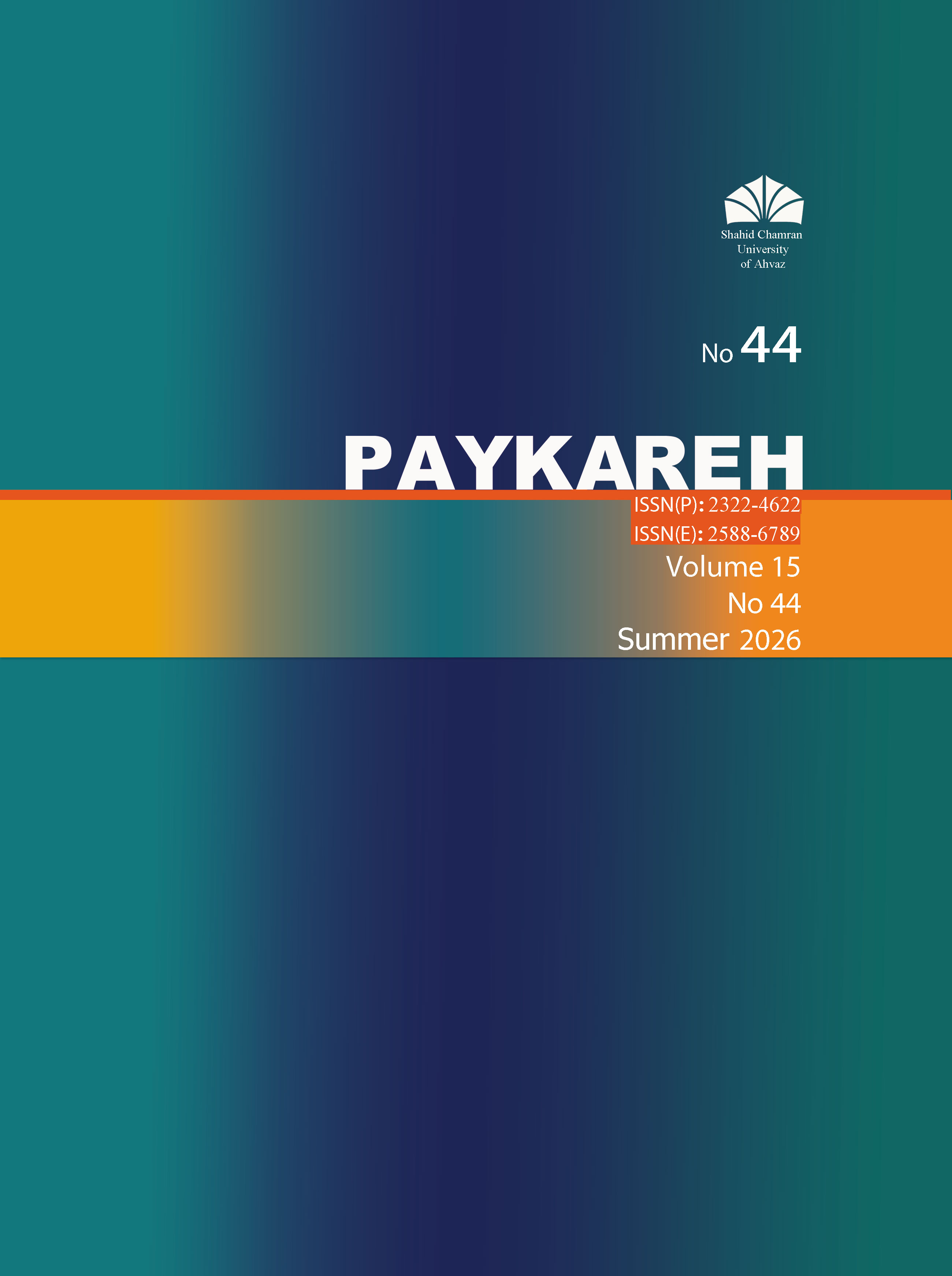
Number of Volumes 15
Number of Issues 44
Number of Articles 257
Article View 233507
PDF Download 348,692
View Per Article 908.59
PDF Download Per Article 1356.78
Number of Submissions 1,106
Accepted Submissions 205
Acceptance Rate 19
Number of Indexing Databases 9
Number of Reviewers 336


Paykareh is a scientific  journal published by Shahid Chamran University of Ahvaz. The journal's mission is to publish emerging issues on art and art history and the latest findings in these areas. It also has a special look at the education and application of art,, with a special focus on interdisciplinary topics of art and history, especially visual arts. The journal also addresses the knowledge gap in the mentioned areas to find new answers for previous research as the priority of its plans. Paykareh is an open-access, peer-reviewed quarterly electronic journal that publishes articles in two languages Farsi and English in PDF format. The published articles are mostly research-based and review articles on art and history fields, especially on visual arts, comparative studies, and interdisciplinary topics.

Paykareh follows the standards of the Committee on Publication Ethics (COPE) and the executive regulations of the Law on Prevention and Combating Fraud in Scientific Works. The matching process for the received articles in Farsi is compared by using the database of the ‘Iranian Research Institute for Information Science and Technology’ (Irandoc) and the English articles are processed by using iThenticate plagiarism detection software.

This journal has a International rating from the Publications Commission of the Ministry of Science And It is indexed in the ISC database Q1 Ranking .

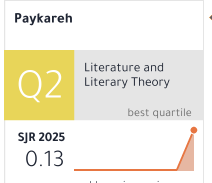
Paykareh Scientific Journal is indexed in Scopus and has achieved a Q2 Ranking in its subject area according to the latest SJR

 Paykareh: 2025 Journal of the Year (MSRT)

..........................................................................................................................................................................................................................................


Publisher: Shahid Chamran University of Ahvaz, Iran

Director-in-Charge: Mansour Kolahkaj

Editor-in-Chief: Mohammad Khazaei

Address: Ahvaz, Golestan Street, Shahid Chamran University of Ahvaz.  P.O Box: 61357-43311 

E-mails: j.paykareh@gmail.com            jpaykareh@scu.ac.ir

Website: https:/paykareh.scu.ac.ir

DOI: 10.22055/PYK

Review Time: 4-8 Weeks

Frequency:  Quarterly

Publication Type: Electronic

Open Access: Yes

Licensed by: CC BY-NC 4.0

Policy: Double Blind

Language: English-Persian

Abstracts: English-Persian

Fee: None

Online ISSN: 2588-6789 

Print ISSN: 2322-4622

The date of the last update of the Website is 28 September 2026


Current Issue: Volume 15, Issue 44, Summer 2026 

Keywords Cloud

  • Painting
  • color
  • Illustration
  • Safavid
  • Qajar
  • aesthetics
  • Symbol
  • calligraphy
  • Islamic Art
  • visual arts
  • inscription
  • symbolism
  • Identity
  • miniature
  • Graphic Design
  • graphic
  • birds
  • Iran
  • iconology
  • Carpet
  • decoration
  • Traditional Calligraphy
  • Defamiliarization
  • Iranian painting
  • Urban
  • Iconography
  • Wall Painting
  • Shiite art
  • wooden door
  • Isfahan
  • art education
  • Typography
  • Mural
  • visual elements
  • Intertextuality
  • Ahvaz
  • Artificial Intelligence
  • visual qualities
  • myth
  • view
  • Comparative Study
  • Art
  • Sign
  • Design
  • Rug
  • Persian Miniature Painting
  • Photography
  • Art fields
  • Animation
  • Motif
  • Contemporary
  • carpets
  • Tehran
  • arabesque-rococo furniture
  • Imagination
  • Calligram
  • Tradition
  • contemporary paintings
  • Semiotics
  • seals of ancient Elam
  • Multimedia art
  • sun
  • reality
  • designer
  • Frito-Lay Inc
  • halo
  • Representation
  • children
  • Cultural capital
  • environmental graphic design
  • Elam gods
  • building technique
  • Wood Carving
  • Proportions
  • Persian ceramics
  • Enghelab street
  • surface
  • Color Frequency
  • Panofsky
  • wisdom
  • Baroque
  • Ancient Iranian Art
  • Sultan Mohammad
  • Interactive Art
  • visual artworks
  • Urban Space
  • Tazieh
  • Research and Technology of Iran
  • Buraq
  • Art Education in Iran
  • Mosul
  • Shia art
  • historical places
  • Shia themes
  • visual identity
  • sociology of art
  • Qajar Period
  • Rationalism
  • Kamalodin Behzad
  • visual symbols
  • Ministry of Science
  • Ilkhanid
  • ewer
  • Khuzestan
  • Qajar era
  • city colo
  • Iranian paintings
  • instances Photography
  • sulus
  • Sahifi Jowhari
  • Erving Goffman
  • teaching
  • Contemporary Painting
  • Islamic period
  • Falnameh Tahmasbi
  • Bourdieu
  • Toufan-ol-Boka
  • metalwork
  • Rumi
  • Safavid Era
  • goinbg beyond oneself
  • Urban Landscape
  • Al-Inju
  • r urban view
  • Structure
  • Chogha Zanbil
  • life tree
  • Traditional Art
  • decorationsassociated with clothing
  • Architecture
  • David Hockney
  • Quran pray
  • the Ascent image
  • Tahmasp Shahnameh
  • deconstruction
  • perspective
  • Islamic ceramics
  • Shahnameh
  • Postmodernism
  • narration
  • University
  • creativity
  • Islamic motifs
  • Persian miniature
  • brand
  • packaging
  • ancient Iran
  • Samanid ceramics
  • Content Analysis
  • the tomb of four kings
  • Mehran Mohajer
  • decorative patterns
  • Modern
  • Qajar artrces
  • Kiya
  • Fractal geometry
  • Pahlavi
  • Iranian
  • Kufic Inscription
  • urban art
  • plant motifs
  • productivity and fertility
  • art teaching center
  • Poster
  • Pierre Bourdieu
  • Supreme Thing
  • teahouse painting
  • Inscriptions
  • Animal Motifs
  • Islamic Mysticism
  • Shikasta Nastaliq
  • Bakhtiari nomadic women
  • Secular Art
  • Rustam miniature
  • decorations
  • Mostafa Oji
  • Shiraz
  • Hyperreality
  • Naseri era
  • lithography
  • Identity Formation
  • Illustrated
  • Indian painting
  • r Bank Urban edge of Dezful
  • Children’s book
  • Royal Figurative Painting
  • Seljuk Art
  • Rhetorical Structure
  • Bird-human motif
  • National
  • Shah Quli Khalifa Muhrdar (the Seal-Keeper)
  • Shahnameh of Ibrahim Sultan
  • Exhibition
  • symbols
  • Formalism
  • Non-observational Instruments
  • Interpretation
  • Book of Fixed Stars
  • Safavid Painting
  • Pluralism